
A song they love. A voice they discover.
At home, your child sings the whole chorus. Asked to repeat it, they suddenly go quiet. With Gabija, a lesson can begin with a single sound: a favourite song, a game, a small discovery worth trying again.

From play to a song
A song your child chooses is the starting point. Short listening, rhythm and vocal exercises help with the part that feels difficult. We try one thing, return to the melody and listen for the difference. Each exercise has a purpose the child can hear.
- 01
Listen to what matters
A tune from a film, a favourite singer or a daily playlist. We find a short passage and a comfortable pitch. A familiar melody gives a child somewhere to begin.
- 02
Turn a task into a game
Echoing a melody, clapping a rhythm, humming or telling a story through sounds. Short, clear tasks introduce listening, imitation and an awareness of how the voice works.
- 03
Bring it into the song
We add the words: where to breathe, how to shape a sentence, when to leave a pause. One task at a time helps the child recognise what they have achieved.
- 04
Make room for their own voice
Try a different mood, invent an ending or sing more softly. Children learn to make choices as well as follow a melody. The pace responds to their attention and confidence.
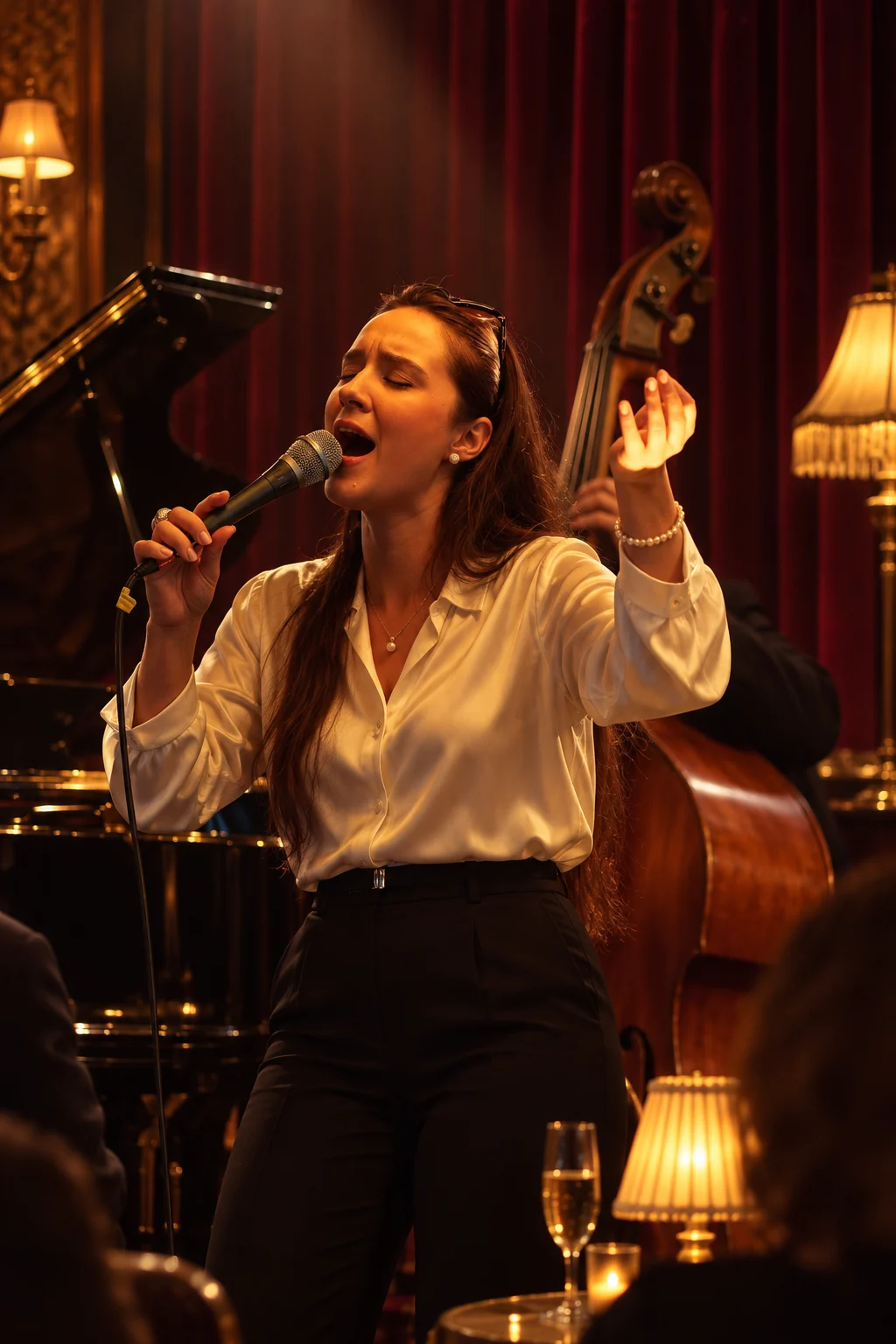
Stage experience. Room for a young voice.
Gabija holds a master’s degree in jazz from the Lithuanian Academy of Music and Theatre. She sings jazz, soul and pop with Vytautas Straižys on the Downtown Piano Lab stage. Listening, rhythm and a personal way of telling a song are central to this music.
In a child’s lesson, these begin with small discoveries: hearing a melody, finding an entrance, making a word clear. There is space to try, get it wrong and sing again. Performing can be a child’s ambition; it is never a condition of starting.
A first note of their own
- Children who are always humming and want to learn the songs they love.
- Shy beginners who feel more comfortable exploring their voice one to one.
- Young singers who want to hear pitch more clearly, feel the rhythm and shape the words.
- Teenagers looking for their own sound and music they want to perform.
Before the first lesson
Does my child need to know how to sing?
No previous training is needed. Humming, a short melody and a rhythm are enough to begin. We get to know your child’s interests and experience, then choose tasks to suit them.
What should we bring?
One or two songs your child enjoys. You can send us links. There is no need to learn a song in advance; it will simply give us a starting point.
What if my child is shy?
We can begin with listening, rhythm or singing together. A solo performance is not the first task. There is time to build confidence at a comfortable pace.
Do we need sheet music or a microphone at home?
You can start without reading music or buying equipment. We work with listening, the voice and a chosen song, adapting practice tasks to the child’s experience.
How much does a lesson cost, and how long is it?
A 30-minute lesson for a child under 12 costs €30. For teenagers aged 12 and over, a 45-minute lesson costs €50. Tell us your child’s age and preferred times, and we will send you available slots.
Get in touch
Start with a song they already love.
Or directly:
+370 624 02 031 · info@downtownpiano.com
Tell us your child’s age, what they enjoy singing and when they could come. That is enough to get started.